
Flow visualization: it’s fun! It’s colorful! It’s exciting!
But is it actually useful?
Flow visualization techniques (flow vis for short) are ways we can take the invisible motion of air in a tunnel and see it in real time.
Each has a different level of visibility, permanence, and messiness, which makes them suited for slightly different purposes.
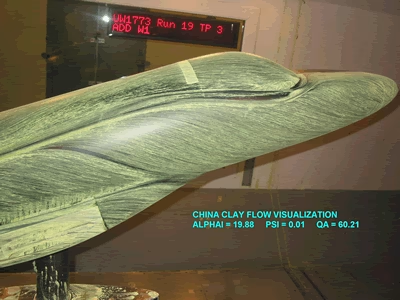
China clay is a method of preserving airflow patterns at a single moment in time. Typically the mix is a suspension of kaolin (china clay) and some sort of pigment, like Day-Glo powder, in kerosene. When applied to a model and the wind accelerated rapidly, the liquid will be pushed around by the airflow. The kerosene evaporates within seconds, leaving behind the powder and pigment as a visual.
This technique is obviously messy and stinky. It also only captures a single angle of attack and airspeed condition, so doing visuals of multiple conditions can take a long time.
However, it provides a clear, detailed image of how the air is flowing over a given surface. You can take your time to evaluate what the visualization is telling you. So if you need high-quality information for only one or two test conditions, this can be a great technique to use.
Dyed oil is a similar method to china clay. It takes longer to dry, which means it has a longer “exposure” time to capture the airflow at the condition of interest. Conversely, this means it also affords you more time to apply it.
I’d say the main tradeoff between the two is in time and mess:
- If you don’t mind the extra time to let oil dry, and don’t care much about having to clean up the oil, it can be a tidier method because you have more time to apply it.
- On the other hand, if you’d rather not deal with oil’s propensity to stain or the longer times to dry, and you’re not bothered by bright green powder getting on you, go with china clay.
Some tunnels will also prefer, or only have, one or the other. If you ask, they’ll tell you which one they’d rather you use.
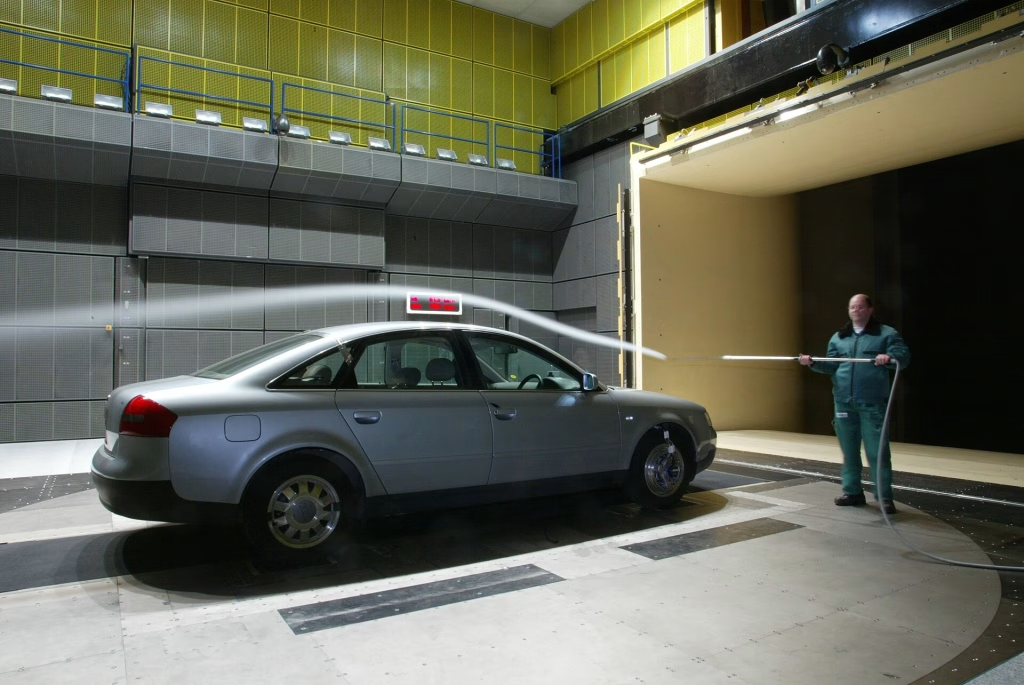
Smoke flow is the flow vis method most folks are likely familiar with. It’s what you see in car commercials: a probe releases a thin, vivid line of smoke, which creates streamlines to illustrate the flow around your model.
This method is impermanent, so you’ll need to take photos or video to record what you observe. The real benefit is that you can move your model to any angle, ramp the tunnel to any speed, and move the probe to any position while the smoke flow is active.
This makes smoke excellent for situations where you need to explore why your data isn’t matching expectations. You can move the probe around and see how the airflow behaves at different locations on the model.
One test I supported used this to troubleshoot why we were losing yaw stability: turns out the nose of the aircraft was creating vortices that, at high enough angles of attack, were blanketing the vertical tails and making them useless. CFD wouldn’t even tell us that until we knew to look for it.
Smoke flow is also awesome for promotional visuals. Even if it doesn’t tell you anything useful, people are always wowed by a photo or video of smoke flowing over a vehicle.
The drawback of these three methods—china clay, dyed oil, and smoke flow—is that you can’t collect good force and moment data while they’re in use. They’re messy to clean up, and you have to be careful your pressure ports don’t get clogged.
There’s one more method that takes more setup time, but is cleaner and can be used during your entire test, even while you collect balance data. That’s for tomorrow.