
Experience has taught me that in any UAV design program, there’s only two or three requirements that really, genuinely matter at the end of the day.
You may have multi-page requirements documents and compliance matrices, full of “shalls” and “wills” and “thresholds”. But if you really drill down into it on the aero-mechanical side, you’ll find just a handful of requirements that are the real reason you’re making this thing in the first place.
And if you don’t achieve them, then everyone might as well pack it up and go home.
I’ve found these fall into two categories:
- Intrinsic requirements: “this aircraft must BE”
- Performance requirements: “this aircraft must DO”
You’ll have at least one intrinsic and one performance requirement, but no more than two of each. These will become your guiding lights in the process.
For the record, this isn’t anything remotely new: one of the more famous aircraft from World War II, the Vought F4U Corsair, was designed in this way.
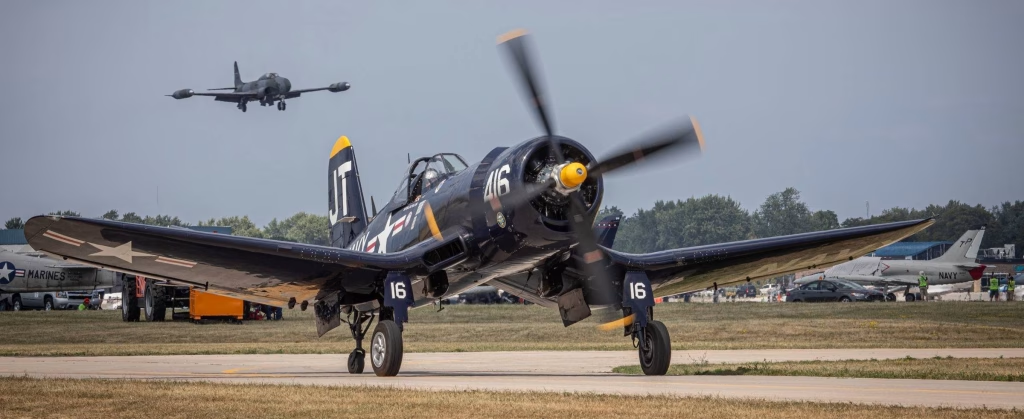
It had a guiding intrinsic requirement: use the brand-new R-2800 Double Wasp engine as the powerplant. Every other design choice fell out of this requirement:
- The massive propeller, chosen to best harness the engine’s 2000 horsepower output
- The signature inverted gull wing, to provide enough propeller clearance with the ground, but without making the landing gear struts too long to withstand the intense forces of aircraft carrier landings
- The oil coolers’ mounting location in the wings, reducing drag while also creating the sound that inspired the fighter’s nickname of “Whistling Death”
And many more.
Even ninety years later, identifying these critical guiding requirements at the start of a design effort is still some of the best time you’ll ever spend.